Showing posts with label Texts. Show all posts

Monroe Institute Session

This is a moderated transript of one of the session that took place in the Monroe Institute. 

An Explorer taking part in the Gateway Program is sending her consiousness beyond known space and time. She encounters other non-physical entites - on an evolved level of consciousness - and reports back what they are exactly saying, what they are communicating and what they are putting into words.
 
The aim is to help us understand our own consciousness, how it operates and how we can influence and change our perception to become more full, integrated, and evolved - ourselves.

Explorer:

There is much doubt. Doubt is the one thing that can prevent each individual from going further.
Doubt is something that is used from your normal awareness in order to not pay attention to other things that you have been trained to perceive. 
Doubt is a defense live mechanism to keep order.
Doubt can be trained to stay away and to allow these new information to come forth.

Great impact upon the individual as well as upon others in your world is very much involved with words. You think in words, you put everything together in words.
There are other ways of communicating - working within the probabilities and utilizing the energies around  - to create states of awareness that will bring about those things that you decided to contemplate or goals that you wish to accomplish.

Take yourself into an environment (state) that tells you that you are worthy and wonderful. Be able to dismiss doubts and negative thoughts and to build and change your internal environment (state).

First step would be - to begin to see yourself open to the Universe, to feel the energy flow through the entire self. Once this begins and once the person becomes more aware of energy flowing, then the foreign aspect (installation) will not be quite so strong.

The individual will be able to visualize and to create. The ability for this nonphysical experience to be in flow is just as the energy when you find yourself on the path, and you keep going. This is what you can look forward - to be more of a CoCreator, to be much more aware of what it is that you desire to have before you.

This for each individual is of course quite different. The abilities are all latent but are now becoming more uncovered by the joining of physical and nonphysical energies. This should be felt on all planes: the physical, the mental, the emotional, the psychological - on all levels. You would then be working in a very conscious way to develop those attitudes, those physical realities and those psychological States that you so desire. 

The world where every individual is a channel, this will someday be quite anordinary thing. That each individual will be quite aware and in constant communication with their nonphysical reality as well as with the physical - this will simply be taught and will be accepted as part of everyday life.

This tends to be the direction on which the evolutionary process is now taking. New sources of energy through minerals and the understanding of sound waves will be important, and everyday part of existence will be quite different from the way that you now experience yourself - as being totally separate. 

Monitor:

To create my future would involve my knowing what I want the future to be. I don't know really what I want it to be. I don't think I understand enough of the big picture, but I want future to be something right. I have this desire to shape tomorrow for healing and happiness of myself and everybody else.
How can we best put that sort of thing into our daily lives, as we walk around in our practical affairs.

Explorer:

The most effective way of bringing those things you most desire is to hold them within your mind and to charge them with feeling.

The overall ideas such as love, such as healing that you mention are excellent to hold within your frame of Consciousness. To add to this your desire - the emotional response - is the energy you give to your direction.

There is really no way of influencing another except through the process of energy that includes accepting and loving that individual without condition. That is really the most spectacular way of making that influence felt, the most effective way of being the leader of the entire self including all possible aspects.

The individual portion of the personality that says I love you all, you are all equal, you are all good, I love you all - this brings all of the aspects, all portions of the personality drawn into receiving this love. And then will reveal themelves to the personality without fear of rejection. The trust is automatically there.

Love is indeed the main, the most beneficial, the most practical way of achieving anything you desire.  
It is very good to hold that idea for all involved. To hold the idea that there is plenty around for everyone. That everyone can indeed live in abundance. 

Also - keep focused on spontaneity within the present moment, and keep focused on total trust in the process. This would result in a state of mind of allowing everything to be as it is and at the same time open up to new possibilities. 

These are very important elements of the creation in every moment. There is the spontaneity that is quite the factor that is involved with every moment. Things are not planned, they occur according to all those involved at the moment of creation. Trust is an essential portion of living and of experiencing
the feeling, the desire, the actual being of wellbeing of Love within this physical universe as well as in the nonphysical.

Monitor:

It seems to me that any individual who desires then to join this kind of state that you describe, can do it if he/she is totally or almost totally free from fear, from doubt and from judgment. If those three things or any of them are present - it seems they block the ability to join the stream of Evolution.

Explorer:

Those are three things that are always great barriers when creating any given moment. Harsh judgment is quite detrimental to bringing about anything more than what is currently happening. Ideas are very much always in a process of creation. Freedom to change ideas, your perceptions, to allow them to change and unfold - is exceptionally important.

***

What did I take from this?

Reduce your fears, your doubts, your judgement (especially fierce and negative one).
Become aware that ideas you hold about yourself and reality are only an ever evolving flows - they are not constant or constrain. You can change the reality and yourself in reality when you allow more loving thoughts, attitudes, and feeling towards whatever you feel and see and do. 

What is Your Character?

 What is Your Character?

In terms of biology, it is a connection of neurological pathways that run in our brain and nervous system in a specific and unique way. 

All our experiences, memories, beliefs, attitudes, thoughts, emotions, feelings, sensations, intuitions create a very complex biological and electromagnetic structure that is unique to every person

How we see ourselves (self image), how we interact with the world, how happy or unhappy we are able to be, what are our reactions to everyday occurrences - depends on those neurological pathways. 

Our conscious mind is at the tip or ‘surface’ of this very complex structure. Most of the processes occur in what we call the subconscious or unconscious. This is why it is difficult to change a habit in one wish or command - we need to change a certain neurological pathway that created the pattern (reflected in our behaviour) and build another one. For this we need a persistent and regular practice, a deep emotional changeover (a shock) and/or a session of self-reflection and insight. 


How to Change Our Life for the Better?

Our nervous system remains constantly in a more or less intense tension. We are wired in a certain way that forces us to think, feel, and behave in a certain way. It is often a very narrow set of pathways, that is not open to other experiences. 

If our neurological pathways are ‘narrow and tense’ we experience unease and/or disease. We may also cause a sense of unease in others. Healthy and happy relationships are one of the most important subjects in our life. We don't want to be a burden to others, though very often we unconsciously send 'signals' of tension - and thus others feel 'unease' in our presence. 

To enhance our ability to feel truly happy with ourselves, others and in every corner of our lives - is to first learn to release the tension. Sessions of deep breathing and relaxation techniques allow access to a deeper state of mind, where positive changes can occur more naturally. 

This rebuilds our neurological pathways - switching off those that cause us suffering, misbehaviour, misfortune - to those that are more in alignment with our true sense of Self - and true sense of health and happiness.

Because the old neurological pathways had been created a long time ago, due to certain events in our life or recurring experiences - it can initially be a difficult process. Old pathways are deeply rooted in our nervous system. Old habits die hard. 

To change them we need a clear and solid motivation and intention. We will not change if we don’t know why we want to change or what we want to change. 

Our life will not change, if we ourselves do not change, if we stick to the old ways of thinking, feeling and behaving. We cannot expect our life to be better if we do not want to better ourselves - what constitutes our character. 

Also - our life may change in an undesirable way - if we are not fully aware of what we exactly want to represent in this life. We need to explore whether it is only a 'folly fancy' of our lower ego-mind or whether it is with congruence with our higher-spiritual-mind. This often is a journey in itself - of self-discovery. 

A set of personal affirmations which are coherent with both - the ego-mind and the spiritual-mind - is another working tool that will explore and direct these changes in a more comfortable, specific and desirable way.  

***

Life is...

Life is abominable. Life is dreadful. Life is horrible. Life is annoying. Life is stupid. Life is boring. Life is interesting. Life is acceptable. Life is likeable. Life is pleasant. Life is attractive. Life is wonderful. Life is delightful.  

All of the above are rightful statements, all at the same time. Life, especially here on Earth, is a pretty damn thing. It has so much complexity in polarities that one can occasionally go mad or disconnect oneself from it on so many levels.  

Let's not shame those who resonate more on the first six statements about life. Let's not disdain those who see life through the lenses of the last six statements. All of us are right. Everything here has its positive and negative side. 

Look at the food. It is an energy for our bodies, it can be tasteful and pleasant. It can also kill us. Be it poisoning, comfort eating, morbid obesity.

Water is necessary. Water can flood our crops and houses. Water killed many people during the gruesome cholera pandemic. The builders who drank beer and were not getting their water supply from infected wells - were the survivors.  

The landscapes are beautiful. The land that we want to ground our seeds in, and feed ourselves off - is a tricky little beast. We have to work hard to get those seeds growing in a raw, clearly unwelcoming environment. The land and most of the creatures on it seem to fight against our efforts. Only after years of persistence we may create a beautiful garden. But still, the weather may not be right, one year. And the abundance of apples is rotting away and inviting wasps and slugs.

The roads are an effect of a huge common human effort. They do not rise on their own. We can transport ourselves through them, and all our goods. We can get injured on them. And yes, they devastate the natural woodland. 

Look at the trees. They clear the air and make oxygen, give shadow, a rare fruit - but mostly the wood. We have needed it to build our houses, and to warm ourselves up in cold climates. We had to kill them, cut them down. Their roots are a menace when growing too close to buildings. They can fall and make a mess. 

Fire is this magical thing, that got us from our animal state to the humanness. We are the only species on Earth that can make and tame fire. How very helpful and essential it has been to our survival and development. How dangerous fire is, untamed.

People are mostly kind and nice. They can also steal things, be irritating, and randomly have murderous intentions. 

When we bring forth a new life, we are overflown with love and care for this innocent, vulnerable, little being. Parenthood gives us a surge of positive emotions so we can deal with the inevitable annoyance of bringing up our children. 

Life is a wonder, when we see them grow. We want the best for them, and in the process of this - we often become overprotective or over-demanding. The love we want to give them becomes a bit of a poison. They grow into selfhood with fat bodies, broken souls or hearts of stone. And one day they simply leave our homely hearth. We have to deal with harsh reality, back again. 

Life is tough. Life is hard. Life does suck. Let's admit it. We are living in serious denial if we do not see it. We force ourselves into positivity to look at the lovely pleasures. This is what we do. We buy stuff, we stuff ourselves and our houses with it, we bring up children, we buy them things, only to forget that life is what it is - tough, harsh and hard. We want to forget about it - all the time.

We all want to make the world a better place, in a variety of ways. We strive for success in those fields that will make life more easy and pleasant for ourselves and other generations. We want to live in paradise where everybody loves each other in eternal harmony. In all these efforts we miss the point. 

Life on Earth cannot be changed, at this stage. It has been designed as a marvellous place with incredibly tough conditions. It is a place where our unconscious souls would go through hell and high water, to get what they want. Only we still miss the point, and we hardly know what we do want, and why we are here. 

***

How do you feel reading this text? What thoughts and emotions have come up in your mind? Have you ever contemplated life in its holistic view - with the bad and good - all at once? 

The thing is, that we try to make ourselves feel good in life at all cost, because internally and obviously - we sense and see that life is full of staggering nuances. It feels like it is threatening us, almost all the time. 

This is the primeval fear that not only we all humans have, but all animals do. It is a very powerful emotion that lives inside everyone of us, and invisibly directs our life from the bottom of our souls. 

It is the emotion that we try to fly from, far away, consuming or creating the goods that let us forget about the fear. We try to fight with it through attempts of changing others, and the world, that will suit our need for safety. We try to turn against this primeval fear by blaming others and everything around for our unhappiness and suffering. 

The subtle change occurs when we turn our attention towards the fear instead of constantly running away from it. Because if we are running away from it, we are running away from a part of ourselves that lives in the dungeon of our subconscious. And this is where the threads of our life are being made. This is where our habits are made, and our conditioning occurs. 

This is what makes our lives feel helpless and hopeless - always to some degree, more or less. Thus we are forced to entertain ourselves to death with all the stuff life brings. Our life has then only one meaning - to cover the fear and its children: shame, blame, embarrassment, anger, hate, and all negative, uncomfortable emotions that we can think of, and feel. 

It is scary to look at the primeval fear, we all want to run away from it, to hide it, but in reality we are run by it. 

To awaken, to be free is to look at the beast. To accept that the fear is there. To make peace with it. To gather all our kindness, compassion and pure love and gently touch the space within us with blessing. 

Fear can be transformed and can become our ally. The residual emotions it holds, that are attached to it, become liberated. We become less fearful in our actions, and we notice that our actions do not arise from fear anymore or solely. Fear is transformed into a helping hand that gives us more clear signals whenever there is a danger, and helps us avoid it. It keeps us away from unnecessary trouble. 

Then we realize how much we need it. As in this Earth environment everything is a potential danger or potential blessing, the transformed energy of fear assists us to choose the path of least resistance. We navigate our life in a more graceful way, seemingly effortless. We are aware of what life is and accept its rules. It becomes a playground for our souls that can freely evolve. And then and only then we are able to see life in its balanced and most encouraging way, choosing the words: 

Life is interesting.   


Runes

Runes are symbols of values, rules and forces of life depicted in simple forms.


FEHU
Livestock (livelihood) is a benefit to all men.
Yet each should give freely
to obtain glory in front of the master.

Keywords: wealth, gratitude, prosperity.

Material security is what you need. Focus on that. Do not forget to be generous with what you already have. 


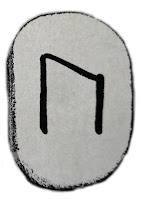
URUZ 
Auroch (bull, ox) is determined and armed.
Fierce and bold it fights with horns.
Monster of the moors, it is a mighty creature.

Keywords: physical strength, brutality.

A time to stand firm, to feel your full power and passion, feeling fearless. 


THURISAZ 
 
Thorn is very sharp for all men.
To seize it is ill and excessively severe 
For anybody who rest among them.

Keywords: resentment, obstacle, trouble, warning, hostility, mistake, pain.

You are about to learn to act more carefully. Know your place and others, and act accordingly.


ANSUZ
God is found in all of speech
Support of wisdom and comfort
and for every man a rest and blessing. 

Keywords: inspiration, knowledge, wisdom, communication. 

Listen to your inner voice, inner (higher, noble) wisdom, with a sense of cooperation, having goodness to all in mind. 


RAIDHO
Riding in the hall is very pleasant but
for the warrior sitting on a strong horse
covering the mile-paths - it is very hard. 

Keywords: change, shift, travel, road,  transition, quest, progress, important choice, destination.

Indicates travel, changing jobs, and situations. Although temporarily may feel uncomfortable, it brings good results through movement.


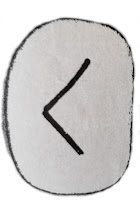
KENNAZ
Torch to all living creatures is clear by its fire.
Shiny and bright it burns most often
where leaders choose to rest. 

Keywords: creativity, inspiration, technical ability, insight, solution, enlightenment, foresight, care, responsibility, leadership. 

Brightness is in and around you, and you may have some leadership role to play. Inventive ideas may come to mind.


GEBO
Gift (generosity, favour, sacrifice) is, for the heroes, 
ornament and dignity 
impels their grace, 
but a support for these with no other (= lonely ones).

Keywords: gift, offering, reward, relationship, love, marriage, partnership, generosity, unexpected good fortune, luck.

Your assets are generous. Expect blessing. Do not forget to share them with those who may rely on you or would like to elevate.


WUNJO
Joy is for those who have little want,
soreness and sorrow, and has for themselves
plenty and bliss and a comfortable dwelling. 

Keywords: pleasure, leisure, self-worth, joy, serenity, happy results, harmony, prosperity, readiness. 

You should look at the bright side of life, where joy lives, and forget about petty little sorrows. 


HAGALAZ
Hail (hailstorm) is the whitest grain, 
it whirls down from the sky’s heights, 
tossed in the wind shower, 
becomes water thereafter.

Keywords: perturbance, ordeal, little disaster, clearance, testing, karmic lesson, quarrel, rage, drastic change.
 
Sudden intense event, or emotional reaction. Unforeseeable forces can damage but also clear the ground. Do little, just wait, it will calm itself out. 


NAUTHIZ
Necessity (hardship, trouble, longing) is distress on the chest
and often strife of the servant. 
It becomes help and healing for the children 
if they listen soon enough.

Keywords: frustration, distress, discontent, obstacle, confusion, conflict, endurance, survival, determination. 

Reflect on how bad things are, and appreciate your distress. You lack something, you yearn for something. It is showing you the way out. 


ISA
Ice is mightily cold and gliding. 
It shines like clear glass, as the jewels, 
a ground worked upon by cold, 
beautiful to look at.

Keywords: surrender, stillness, coldness, calmness, detachment, focus

Stop the process, be patient, be still; withdraw, rest, reflect. Look within or act with utter attention.  


JERA
The year (harvest) is a joy for the men 
when the god, holy king of the skies, 
makes earth supply brightly, the noble and the poor.

Keywords: change, cycle, reward, harvest, motion, productivity,  development.
 
It looks pretty good. Enjoy it while you can or expect reward in some time after. Everything changes, in its own time.


EIHWAZ
Yew is a tree, rough from the outside, 
hard and fast in earth, 
a shepherd of the fire, 
his roots under the pillar, 
a joy on the native land.

Keywords: stability, endurance, reliability, trust, border, defense

There is a right way to get things done. Make clear boundaries between what is necessary and what stands in the way. Stick to the plan. 


PERTHRO
Chessboard is feast day, 
games and casting by lots, 
for the proud (or the splendid) fighters 
sitting in the bier hall, happy together.

Keywords: celebration, game, mystery, secrecy, fate, prophecy

There is some (r)evolutionary change in the play. Stay centered, see the humour of the situation, and keep your faith in fate.


ALGIZ
The elk of the sedge often dwells in fens, 
grows in water, 
grimly wounds and burns 
with boils the blood of the hero who seizes it.

Keywords: protection, assistance, defence, support, sacredness

The protective urge to shelter oneself or others, to ward off danger and unwantedness. Connection with the gods to channel higher energies.  


SOWELO
Sun (victory) is feast day and hope 
for those who depart on the fishes’ bath 
until the wave-steed brings them to land.

Keywords: success, energy, awareness, power, activity, fertility, health

Success is, goals are achieved, honor is given. Life-force energy brings health and wealth. Positive changes come through sustained effort. 


TIWAZ

Tir is one of the signs; 
it keeps well its promise (also possible: it controls well the tree) 
with the noble, 
and it is there during the travel 
above the dark of the night, never deceives.

Keywords: duty, honour, justice, responsibility, self-sacrifice 

Knowing where one's true strengths lie. Willingness to self-sacrifice. Victory and success in any competition or in legal matters. 


BERKANO
Birch has no shoots, 
it carries its rods without fruits; 
radiant high twigs, 
high its crown with leafs fairly laden, 
reaches the sky.

Keywords: health, new beginnings, growth, conception, plenty

To be prepared for the new. Regenerative power and renewal are the promise of new growth. Prospering of an enterprise.


EHWAZ
Steed (or war steed) is for the princes and the noble’s joy; 
the warhorse arrogant in the hall, 
where the wealthy heroes exchange talk. 
And it is ever refuge to the unstill ones.

Keywords: balance, stability, transportation, motion, communication, partnership, teamwork, trust

Move forward carefully with the tools that will help you get there. Remember to communicate clearly and with respect. An ideal for marriage or partnership. 


MANNAZ
Human is mirth to the beloved kin; 
he shall though each one deceive, 
when the lord will doom this miserable flesh 
to be entrusted to earth.

Keywords: humanity, community, relationships, society.

Establish social relationships, personal connections also with the Gods and with Nature, as this affects our deeds on the mundane.  


LAGUZ
Water (sea, ocean) seems lasting to the liegemen 
if they venture out in a tossing bark (ship), 
so frightening are the waves of the sea, 
and the surf-steed no longer takes care of the bridle.

Keywords: healing, emotions, unconscious, intuition, counselling

Enhancing psychic abilities, confronting fears, healing mental or emotional disorders, uncovering hidden things.


INGWAZ
Ing was first among the East Danes, 
so was he looked at, 
until towards East he went on the wave
after his wagon, 
thus these proud men named this hero.

Keywords: land, work, productivity, bounty, groundedness 

Acquiring land or property. Strengthening family ties. Finish what you are doing, tie up loose ends and there will be a space to start something new. 


DAGAZ
Day is sent by the Lord, 
mankind beloved, 
glorious light of the creator, 
joy and hope for the rich and the poor, 
useful to all.

Keywords: happiness, success, activity, fulfillment, satisfaction
 
A new day begins and we go to work. We are more insightful, breaking through new ideas. Light is around and it brings a positive outcome.


OTHALA
Native country (ancestral home) is loved by each human, 
if there the moot holds, 
and that he enjoys justly 
and often the convenience of his sweet home.

Keywords: inheritance, home, permenance, legacy, synthesis, sense of belonging

Spiritual heritage and fundamental values. Source of safety and belonging. 

The Astrology behind Leonardo Da Vinci's Last Supper

The true 'Renaissance Man', Leonardo Da Vinci, had created this famous mural in the refectory of the Dominican convent in Milan. He studied ancient knowledge and was aware of some connotation between astrology and the origins of Christianity. 

Why there were Twelve Apostles, first of all, not ten, fourteen or sixteen? Why the symbols of Bull (or Ox), Lion, Eagle and Man, the Evangelists? There are symbols of lamb (Aries) and fish (Pisces), early Christian depictions present Christ as Sun, often similar in appearance as Apollo. How it all came to be? 

These concepts are reflections of the Zodiac, an ancient calendar system that originated in the earliest civilisation of Sumer. Early calendars had been constructed as series of symbolical pictures from which religions of the early societies were developed. 

The ancient people also noticed that people born in a specific time of the year are under some sort of celestial influence that gives us a rough form of a specific personality.

The Zodiac thus refers to the twelve archetypes of Nature, including human nature. Leonardo was certainly aware of the relations. He made clear connection to this ideas in the Last Supper masterwork, that had been groundbreaking in its own time.

***

The Last Supper scene captures the moment when Jesus is announcing to the twelve Apostles that he is about to be betrayed by one of them. 

Each disciple reacts differently, each is caught in a moment of different amazement, puzzlement, bewilderment, each shows different gestures, mimics - according to their own distinct personality. 

The Apostles are divided into four groups, each having three figures. The fours groups are the four seasons, consisting of three months, each.

Starting from the right there is Spring, Summer, Autumn and Winter, on the left.  
Why from right to left? Leonardo was left handed, and he also often used the mirror writing.


The names of the Apostles in the sitting order are based on Leonardo's Notebooks.
From this perspective, four groups of three Apostles, from right to left are:

Spring Signs:

1. Simon the Zealot - Aries
2. Jude Thaddeus - Taurus
3. Matthew the Evangelist - Gemini

Summer Signs:

4. Philip - Crab
5. James the Great - Leo
6. Thomas the Apostle - Virgo

Autumn Signs

7. John the Apostle - Libra
8. Judas Iscariot - Scorpio
9. Simon Peter - Sagittarius

Winter Signs

10. Andrew the Apostle - Capricorn
11. James Minor - Aquarius
12. Bartholomew - Pisces

Spring Signs


On the right side, from the left: Simon (Aries), Jude Thaddeus (Taurus) and Matthew (Gemini), are excitedly conversing. Their demonstrative hands gestures is in a dynamic succession, drawing our attention from the edge of the painting towards its centre. 

However they seem to be cut off from the rest; they are clearly rapt in their own circle. The three Spring signs relate to the Self, they are more self-absorbed and self-centred then other Apostles/Signs.

1. Simon the Zealot - Aries

The first apostle on the right is Simon who stands for Aries. His distinctive head (astrologically Aries is connected to the head and head-strong qualities), open-up palms suggests sincerity. He says clearly 'no' with his hands, 'I have nothing to do with it, I am innocent' as another Aries fixture.

He is an obscure apostle among others - very little record of him can be found, aside from his name listed only in Luke's Gospel. "Zealot" (zealous - devout, ardent, fervent, fiery) could mean he was a member of the Zealots, a 1st century Jewish sect, who wanted to get rid off of the Romans by force. We can easily sense the familiarity with the Aries characteristics.

2. Jude Thaddeus - Taurus

Thaddeus, the Apostle immediately to Simon's left, symbolises Taurus. His powerful posture coupled with his hands one pointing at his neck (Taurean refference as it rules throat) and the other on the table are a testament to Taurus appearance and character. 

The world he had trusted is going to change dramatically, apparently - this is not something Taurus welcomes with ease. A Sign of great material stability, any change has to come slow and after much debate.

Juda Thaddeus is distinguished from Juda Iscariot, sitting at Scorpio placement. Taurus and Scorpio are paired with each other (as all other Zodiac signs) based on opposition - attraction principle. 

There is very little of him in New Testament. Luke gives different name to the apostle (Jude, son or brother of James) compared to the one mentioned in Matthew and Mark (Thaddeus). Jude and Thaddeus were decided to be made a one person.

He later became patron of desperate cases and lost causes. Da Vinci could interpret this as being matter-of fact, reliable and practical, another strong Taurean feature. 

3. Matthew the Evangelist - Gemini

Next comes Matthew who represents the sign of Gemini. The head and arms point in different directions, symbolising curious, contradictory, busy, fidgety energy of Gemini, that wants to have their share in other people affairs.

This apostle is well known. Matthew is believed to be the author of the Gospel of Matthew. He is widely presented only in this Gospel. Self-advertisement, self-promotion, as we would say today, of which Gemini people are never too far away. 

Interestingly, Matthew and John, the alleged authors of the Gospels, are the only two Evangelists among the chosen Twelve, both residing in Air element signs: Gemini and Libra. They both are connected to passing on information, reading and writing. (The other two Evangelists, Mark and Lucas, were not among the Twelve Apostles).

In Leonardo's painting there are quite visible, distinctive Gemini feature - youthfulness, motion, his arms are well pronounced, being the symbol of the Sign.

Matthew, in his "own" writing, was a tax collector, before joining Joshua's (Jesus) crew. 

The main characteristics of Gemini: communication, youthfulness, activity, versatility, self-importance, are traditionally associated with exchange of words and money - writing, publishing, trading, marketing.

Summer Signs

The next group engages with Christ announcement more directly. Philip (Crab), James (Leo), Thomas Virgo), represent the Summer season. Astrology describes this quarter as abilities to connect with the world in a familiar environment

Their heads are close together suggesting the importance of close relations, yet distinctively different from each other. 


4. Philip - Crab

Philip who stands for the sign of Cancer, the Crab is leaning forward, half raised from his seat, touching his heart in a closed hand gesture. He seems quite disturbed. His raised appearance says he is an emotional type, deeply moved, now nearly heartbroken, with his hands towards the middle-chest.

Philip figures most prominently in the Gospel of John. He gives Jesus the opportunity to talk about the relation between the God-Father and the Son. 

Crab sign is the most 'family oriented' and feminine of all Zodiac signs. It stands for caring, nurturing, seeking safety, giving protection and needing it. The feelings are vulnerable. The red robe perhaps stands for his acridity, tartness as the Crab people can be very sarcastic and snappy.

It is worth mentioning that the Gnostic Gospel of Philip, found in the early 20th century in Nag Hammadi, among other early Christian writings, puts Mary Magdalene in a completely different view then those earlier, acclaimed by the Roman Church.

Leonardo and other painters must had been familiar with its content to some degree - Mary Magdalene has a pivotal role in many Renaissance paintings. The feminine connection in the Philip-Cancer relation is quite rightly strong here.

5. James the Greater - Leo

James, son of Zebedee, stands for the sign of Leo. There is a robust confidence and theatrical drama in his act of stretching the arms so widely. Leo needs a lot of space to express his feelings, and it has to be in a grand manner. He seems to be virtuous, openhearted, and a bit pompous. His face strikingly resembles that of Jesus' - as no other apostle. In astrology, Leo sign is ruled by the Sun itself.

The Gospels state he was one of the first disciples to join Jesus. The Acts of the Apostles records him as the first of the apostles to be martyred. In Christian terms, martyrs are the celebrities of faith. Leo is all about being the first to be noticed - whatever the life-stage. Showing off, marking his presence, craving for appreciation. It makes him so proud.

The Way of St. James is famously related to the Spanish town of Santiago de Compostella - one of the most popular pilgrimages for the Catholics. When 25th July, when the Sun is traditionally entering Leo sign, falls on a Sunday it is a ″Jubilee″ year, and a special door is opened for entrance into the Santiago - oh yes, the Leo likes the splendour.

6. Thomas the Apostle - Virgo

Barely visible, hiding behind the scene of James, is Thomas, symbol for the modest sign of Virgo. This is 'Doubting Thomas' - face on. He disbelieved in Christ resurrection, when first told of it, and demanded to touch the wounds. 

Virgoans are down-to-earth people, they do need tangible results and proves. Thomas is pointing upwards, perhaps asking for one shred of evidence. Virgos cautious, critical and questioning nature may also be in him saying 'Didn't I warn you?' 

Virgo's agile mind will not follow easily the general trend; rather on the contrary. So here he is - stoical, even a bit satisfied that his whining came to an effect, perhaps.

According to another legend, Thomas was the only witness to the assumption of the Virgin Mary, and caught her girdle, a symbol of virginity

The sign of Virgo from Greek mythology depicts Astrea, who also raised to heaven in her virgin, pure state. Quite convincing substance even for doubting Virgo.

Christ 

He seats in the middle - at the calendar point of Autumn Equinox, the time of traditional Great Feast of the Harvest in agricultural societies. This is when the Wheel of the Year is cut in half - like a bread, and than in smaller pieces, given to everybody. Leonardo makes it quite clear here, voluntarily or involuntarily. The religion is derived from customs related to the circular passing of time.

Of course, the Christians relate the Last Supper to the moment of Easter, around the Spring Equinox. But this is the First Supper really, after months of near starvation when people had been dependant on food from natural resources. The meaning behind the celebration is not always right and here, Leonardo is aware - the Last Supper happens on the verge of Autumn time.

This is when the Sun is going to 'die'. From around 23rd of September, in the Northern Hemisphere sunlight of days gives way to the darkness of nights. The annunciation of Jesus doomed fate relates to this astronomical fact. 

Autumn Signs

The third group, John (Libra), Judas (Scorpio) and Simon Peter (Sagittarius), is of the most complex significance. The signs are in the third quarter of the years, relating to development of serious relationships. There is intimacy between them, they seat so close to each other.


7. John the Apostle - Libra

Continuing on the other side of Jesus we find John, his favourite apostle, the Beloved one, who unmistakably stands for the sign of Libra. His whole silhouette expresses Libra's delicacy, culture, love for harmony

Libra stands for all kinds of partnership but the most important is of course marriage.

John is often identified as Mary Magdalene. Some find it as an indication of a marriage between her and Jesus. In this instance, John is a symbol of marriage, quite right. Anyway, it was 'normal' at the time for a young man, and John was the youngest of the disciples, to be portrayed as effeminate

Christian tradition identifies John as the author of one of the Gospels, the Epistles of John, and the Book of Revelation, although modern scholars argue they were three separate persons; the author of the Gospel of John never identifies himself by name.

John is the one to remain calm and composed. As if he knew something more. He leans towards Simon Peter to hear what he is saying. The intimate communication in relationship of Libra sign. Gentle and romantic, maybe a bit sad but certainly diplomatic. Harmony and balance emanates from this figure. 

One of St. John's attributes is a cauldron or a chalice with a serpent in it. Sigmund Freud would have something to say... it is a popular symbol of vagina, in dreams and in art. 

8. Judas Iscariot - Scorpio

Judas is pictured in Leonardo's 'The Last Supper' as the eighth disciple corresponding to the eighth sign of the zodiac, Scorpio. His dark and grim expression stands for the energy of Scorpio, the sign of power, mystery, death and transformation.

Scorpio is regarded as the most suspicious, jealous, passionate and possessive Zodiac sign. His role as Judas Iscariot is more then adequate. Judas has betrayed Jesus for a bribe of "thirty pieces of silver".

Scorpio is known to have two natures. One is the Scorpion - a low-lying insect which will either sting and kill itself if backed into a corner. The other is the Eagle (as depicted in the Apostles symbols) - a bird which is free to use its energies to fly to the highest of mountain tops, where it achieves with its extraordinary vision the highest and widest of views, but can cling sharply to the victims body with its firm claws.

Of course Scorpio character is not a back-stabbing, money-grubbing traitor. Quite contrary - he is one of the most loyal in the Zodiac. Only when Scorpio is offended or paid for, will show his most ferocious traits. 

In astro-mythological terms, the kiss of Judas is as venomous as the Scorpio sting. He reflects the all important mythological figure, around the world, recognised as trickster. His evil doings serve greater good. If not his presence, the transformation of the matter cannot be done. And the matter is that Jesus/Sun must die, must be sacrificed, on the big cross of the calendar wheel. Nature has to die in order to be reborn, resurrected. Those life-death mysteries and intensity are familiar to every Scorpio person

A Coptic text titled the Gospel of Judas, suggests that Jesus may have asked Judas to betray him. Whatever the reason for the treason, Da Vinci's masterpiece catches the secretive character: his silhouette is darker than others, he's leaning backward, as a mark of reflective, reserved nature of Scorpio. 

He's holding a bag, the other hand in gesture as reaching for something rapidly. Behind his back is the troubling hand with a dagger, representing the Scorpio's vehement sting.

9. Simon Peter - Sagittarius

The next apostle is Peter, the Sagittarian among the apostles. He appears to be dynamic and energetic, but in a rather chaotic sense.

All of what we know about St. Peter does quite fit to the Sagittarian qualities - he is known for travelling extensively, he is restless in his faith, and acting as a spokesman for the rest of the Apostles. 

Peter, according to Christian tradition, is the most important figure among the Apostles. He establishes the church - and this is another of Sagittarius traits - confront and conformed to a system of beliefs

Sagittarius constellation had been, about that time, just moving into the point of Winter Solstice, around which the most celebrated holiday has been held for thousands of years - the re-birth of the Sun, in Christianity known as Christmas.

The previous constellation at the Midwinter point was Capricorn, and this sign is clearly related to mountains and rocks. After Simon's transformation he is called Peter - petra, rock in Greek - by Jesus (as a sign of that shift?).

“On this rock I will build my church” - is surprising because Peter proved to be unlikely a symbol of stability. In Matthew he is called of "little faith", and "Satan" by Jesus, and denies the Christ, three times. The Keeper of the Keys of Heaven, a point where the Galactic Black Hole is in the Sagittarius constellation - taken symbolically, where the most important in astronomical calendar event occurs - the Winter Solstice.

In Gospels, Peter is the first apostle to enter the empty tomb and the first to see the risen Christ. Those events relate to the Winter Solstice pre-celebration mood, of great expectation, optimism, exuberance, faith, mystery

It is surprising that being such a role-model in forming the religion, many of books ascribed to Peter (another Gospel, his Acts, and another Revelation) are rejected by Church as apocrypha. This is quite in line with Sagittarius. He is an important figure in every gathering, but can be easily dismissed because of his flamboyant outlook and behaviour.

Da Vinci's Peter is keen, lively, interested, he reaches out to grasp the Truth, beckons towards the closest source, St. John, thinking that he should ask who it should be of whom the Master spoke. Peter, with his hand on John's shoulder, is asking John "Who does he say it is?". Sagittarians like to know what’s going on around them.

Many think that Peter is holding the mysterious dagger; his hand is twisted backwards away from Judas, at a very odd angle. He would cut someone’s ear off, as it is written in Scriptures. Had Leonardo's thoughts about the Church been present here? That the main apostle was a traitor and the Church propagates false teachings? Again, many believe it was so. Nevertheless, the posture depicting Peter is very Sagittarian - curious, eager, straightforward, bustling. And a bit dangerous.

Winter Signs

Andrew, James Minor and Bartholomew form a group of the last three. They are the most composed ones. They consider it with a cool, detached notion, as the Winter cold climate appears. 


10. Andrew the Apostle - Capricorn

Andrew seems aloof but at the same time clear, distinctive and decisive. His hands are raised in a gesture that indicates where his own boundaries are, making it the most steadfast impression of all the apostles.

He is patron saint of the Patriarchate of Constantinople, which is seen first among equals of all the Eastern Orthodox Churches. Its archbishop is traditionally seen as successor of St. Andrew in the same way as popes in Rome are successors of St. Peter. Capricorn is the sign of conservatism and orthodoxy in some regards but do not forget the great hierarchical pomp that goes with it. It all fits well with the Capricorn characteristic.

Peter and Andrew had similar requests concerning their crucifixion - they deemed themselves unworthy to be nailed on the same type of cross as Jesus, thus providing Christian symbology with another two types of cross: the inverted cross (Satanists cross), and the Crux decussata - Saint Andrew's Cross (X-shaped cross). And we may think again about the centre of the Galaxy, symbolised by the crosses.

The diagonal cross became in Byzantium a symbol of Christian-imperial power. To such strong power and structure the sign of Capricorn is also attached.

Again, in Da Vinci masterpiece, Andrew has a lot of similarity to the Capricornian main qualities: he seems confident and prudent, stern and strong-willed, disciplined, loyal, cold, composed. His open palms show us that he would not tolerate any dirty-tricks and that he distances himself from what was just announced.

11. James the Just - Aquarius

The next disciple is James, son of Alphaeus, who is the Aquarian among the disciples. He has physical contact with both Andrew and Peter, symbolising the Aquarian ideal of contact with like-minded people

An important leader in the early Christian history, very vague and surprisingly underestimated in later tradition. Named both in New Testament and by Josephus Flavius (1st century Jewish historian), the "brother of Jesus". What does it mean, no one exactly knows. It is assumed by Christian Churches as "cousin". And in astrology it means the 'like-minded people' of whom Aquarians are very fond of and their hobbies they can engaged.

In the Act of Apostles he is the leader of Jewish Christians in Jerusalem and being later the first bishop or patriarch of Holy City. What Leonardo knew about the James is a guess-work, though he clearly visualised him as an Aquarian type on the Last Supper mural - friendly, kind, liberal, and a bit quirky

There is however one more clue as to Da Vinci's mischievous brilliance: James seems to be pointing with his left hand to the person who he think or feels is or would be a traitor. But who is it - Peter or Judas Iscariot? He likes a puzzle.

12. Bartholomew - Pisces

The last apostle is Bartholomew, who represents Pisces, the sign that completes the Wheel of the Zodiac. He smiles mysteriously. He seems to be observing the proceedings with an air of equanimity without really being involved. A seclusive nature of Pisces, that prefer to be engaged in serving the public on their own. 

Little is known of him. He is mentioned by name in New Testament, but apart from that there are no records of his words or action, and this is typical for Pisces - to be working quietly away, doing their duties diligently, sacrificing their energy.

According to legend his body was found off the shore and brought to Cathedral by children.

Looking at the painting one can see Bartholomew's Piscean concern and sadness. He is so emotionally involved that it threats to his sense of well-being and would break his heart. He seems frightened and scared and his affectionate nature is looking in hope that what he's just heard is not true. 

Pisceans are often described as living in self-denial, for good or bad, in assumptions only to protect their sensitive nature.

***

Leonardo's mastermind piece of art puzzled many along the timeline. He worked on the Last Supper for many years, abandoning the project and resurging it - as if he gained a knowledge how to depict the missing parts. There are many interpretations of his art. This is one of them.


Astro-Personality Chart

The position of the celestial bodies: Sun, Moon and the seven planets are the basis to understand your character as seen in astrology. 

To make it more clear for you, below is a table that attributes different astro-bodies to the traits of your personality. 


Upper Atmosphere

The first upper row consists of Moon, Sun, and Mercury and is called the Upper Atmosphere, and it may refer to the Persona in psychology - the face we give to the world. 

In a short glance it describes what 'shines' over and out of the person.  What we first sense with our sixth sense is Moon sign. On this basis we instinctively, intuitively know whether we resonate with the person or not.  
Sun is our overall appearance, and through which of the Twelve Zodiac lenses we see the world and how we act and behave in it.
Mercury is the way we talk and think. Level of our intelligence, and of our interests.


Middle Earth

The second row is the Middle Earth with Venus, Jupiter and Mars. This is the most tangible, everyday element of a personality.
We get to know people on this level when we are more in touch with them. We are often surprised that people who we were drawn to - appeared after more acquaintance - quite different, more complex. These are simply deeper character traits. 
Venus tells us what and how we love.
Jupiter tells us about our ambitions and inspirations.
Mars tells us either about our will or about our anger and fear. 

The Underground

The third row of Uranus, Saturn and Neptune relates to our roots - where are we coming from sort of way. The slow-moving generation planets give a background to the personality, an Underground environment from which it starts to grow. 
It relates to the Subconscious in a very broad term, the collective trends that were most present through the planets. How we  experienced their influences personally is a matter for a very long study. Here are simply glimpses of what this hidden part of ourselves can hint towards. And it hits us most when we are lost in the depths of life,  or in crisis. 
Saturn is the most important in our solo project. The 'Saturn lessons' is what we need to go through in life as this is the most challenging planet. When we master it we become masters of life. This however, rarely happens, and this is why it is called the planet of Karma.  

The Rows:

Upper Row - Moon - Sun - Mercury - when you first meet a person, you sense the configuration of this upper layer. 

Middle Row - Venus - Jupiter - Mars - is what you get to know about a person when you spend some time around them. This is a family/friends circle. 

Under Row - Neptune - Saturn - Uranus - is what is most hidden, and you know the Shadow of the person when you know them really well (we consider Pluto position as well).


Now let's consider the Vertical Rows, the Columns:

Feminine - Yin 

The first left column consist of Moon, Venus, Neptune. This is the 'femine' side, the soft, mother-like, caring that relates to our private inner world.

Neutral - Centre

The middle vertical column with Jupiter, Sun and Saturn describes the backbone of a personality, sort of tasks that a person is hoping to achieve and direction it wants to express itself. It often refers to Life Mission and Purpose. 

Masculine - Yang 

The column on the right is with Mercury, Mars and Uranus. It relates to the fatherly notion of outer activity in the world. The behaviour and line of action, a style of intellect, and how it is expressed outside. 

The Columns:

Left Column - Moon - Venus - Neptune - the soft, feminine, inner side, when a person is relaxed and in private. 

Middle Column - Sun - Jupiter - Saturn - the person's public image, often a career. 

Right Column - Mercury - Mars - Uranus - the harder, masculine side, showing the outside dealings with the world, communicating, doing, behaviour, what others in close circle experience while with the person. 


***

If you are interested in having such a chart done, for yourself, loved ones or others, contact Rena:

renasanceconsultancy@gmail.com


How Astrology Came to Be? History of Astrology

Astrology has been in human interest long before the dawn of civilization. As a matter of fact - it had been a significant force behind it. Astrology was born when ancient men looked up in the skies and had seen the wandering Sun and Moon and the little spots known as planets - Mercury, Venus, Mars, Jupiter, Saturn. Hunter-gatherers communities were already interested in the movement of the celestial bodies. There are marks in stone relating to the visible constellations all over the world. It is now widely believed that many of the ancient signs and symbols drawn or carved in stone refer to the 'constellations' and celestial bodies and their seasonal movement. 

[carved points]

The Neolithic people, the first farmers took 'astrology' as their guide to the settled life. They needed a special calendar to facilitate the community living based on sawing and harvesting the crops. The most famous ancient calendar of this sort is Stonehenge.

[Stonehenge]

Astrology had been banned by some religions in the Middle-Ages; it had a quite important return in Rennaisnance; substantial defiance in the Age of Reason, and a complete mish-mash in 20th century, yet encouraging. We have now only realized, that after 5000 years since civilization and the astrological system was born in the Middle East, we have come back full circle to the ability to study astrology with the necessity of gathering the facts and data. 

[old astro-map]

With the use of modern technology, astrologers can gather data and make important comparisons - to bring into light more reliable results. This has always been a struggle in astrology - to have a proper data and a proper analysis of that data. The data has been very scarce since new astrological dawn in the early 20th century.

Nowadays we see very little of the 'stars up in the sky'. So we dismiss the knowledge. It is not part of our paradigm - the set of rules upon which we live. It does not mean however that the heavenly bodies do not exist. We have little (or none) opportunities to observe the night sky - what is going on up there, how it changes, every hour of the night. 

[night sky with positions of some planets]

So how we can be sure that those bodies do not affect our being? Because they are too far away? It is known that the movement of the Moon and its phases do influence people on a subtle level. This subtle level, invisible to modern measurements, has been an evocative point to explain the planets mysterious action on a given date - an event or a birthday. The ancients spend hundreds if not thousands of years comparing the positions of Sun, Moon, the planets and the constellations. They noticed that certain alignments relate to special occurrences here on Earth - from major to minor. 

[ancient graph of astrologer]

Kings rising and downfalls. Personalities of ordinary people born under a specific time. Most of the myths relate to those observations. Religions, especially Christianity is full of astrological symbols, even if its authorities want to deny it.

[Christian zodiac wheel]

Only in a tribal environment, in small settlements, when people lived close to each other, they could observe different character traits of the individuals. They noticed it is due to the time of the year a person was born. It was a 'natural psychology', and it eventually led to science. Intrigued by their discovery they had to find ways to investigate further because they saw that all living organisms on Earth are subject to cosmic cycles. One of them is the Wheel of the Year.

[wheel of the year]

Astrology can be seen as a root of not only of all science - there was a need to calculate precisely the movement of the Sun and Moon and how they relate to each other - quite a complicated task. It also developed writing, literature, drama, mathematics, geometry, astronomy, agriculture, medicine, and so on - many of the ingredients of our culture.

On how important astrology had been, one may only realize that it survives to this day and is ever-present. The seven days of a week - from the day of the Sun(day), then Moon, and following all the planetary position in the Solar System, using the names of Anglo-Saxon and Norman gods. More about it in The Magical Seven

The twelve months of the year are another legacy of the Sumerian composition of the sky - how and why they have divided the year into twelve, not ten months, for example. There are many direct and indirect pieces of evidence of the workings of astrology into our very fabric of life.